
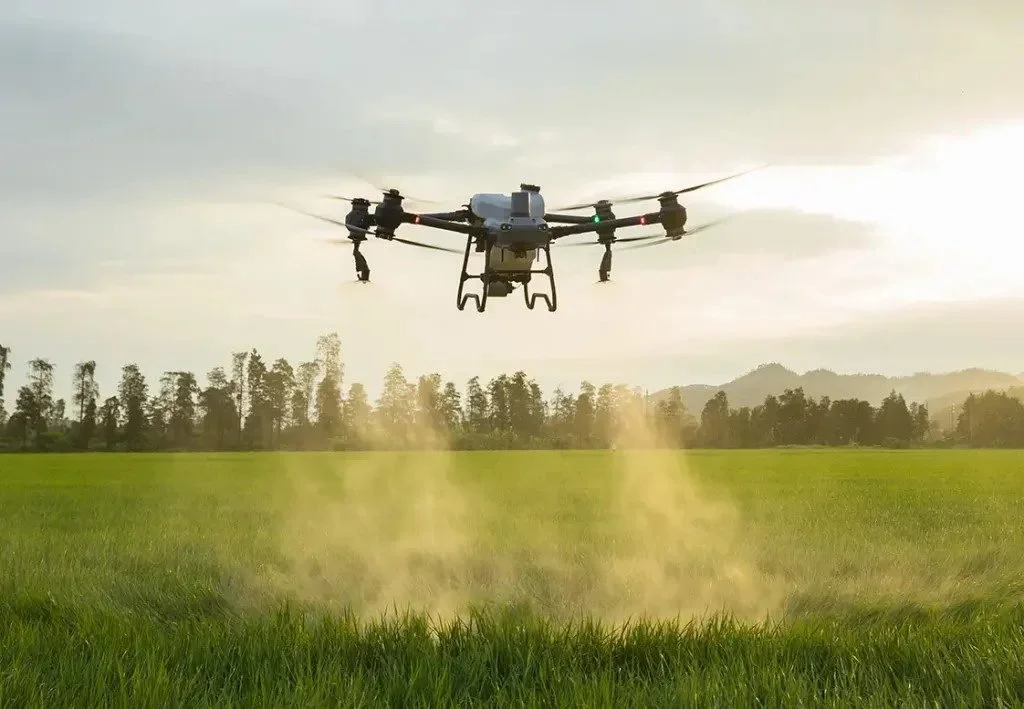
If you are a farmer in Kenya asking what drone spraying costs per acre, you are asking the right question — and the honest answer is: it depends on a few factors you can actually control. This guide explains what drives the price, so you can get an accurate quote for your own farm in minutes.
What determines the cost of drone spraying in Kenya?
Farm size and location. The biggest driver is acreage. Spraying is priced per acre, and the rate drops as acreage rises, because the drone team’s travel and setup time is spread across more land. Neighbouring farms that book together almost always pay less per acre than a single small plot — this is why we encourage cooperatives and farmer groups to book as a block.
Crop type and canopy. A low, uniform crop like cabbage or maize at early stages sprays faster than tall, dense canopies like mature tea, coffee, or bananas. Faster coverage means fewer flight minutes per acre — and a lower price.
Terrain. Flat, open fields allow long, efficient spray lines. Steep slopes, scattered trees, and irregular plot shapes slow the drone down. (This is also where drones beat every alternative — terrain that a tractor cannot enter at all is routine work for a drone.)
What is being applied. Herbicides, fungicides, insecticides, and foliar fertilisers have different application volumes per acre. The product itself is usually the farmer’s own cost; the spraying service covers the aircraft, the licensed pilot, and precise application.
How often you spray. A one-off emergency spray — say, when fall armyworm appears — is priced differently from a seasonal programme with scheduled applications. Seasonal contracts come with better rates and priority scheduling.
Why farmers choose drone spraying over knapsack spraying
Speed: a drone covers in minutes what takes a knapsack team a full day. Chemical savings: precision application typically uses less product than manual spraying, because the drone applies a uniform rate with no overlaps or gaps. Safety: no person walks through the field carrying chemicals on their back. Water savings: ultra-low-volume application uses a fraction of the water. And timing: when pests strike, a drone can treat your whole farm the same day — with pests, every day of delay costs yield.
So what will it cost for YOUR farm?
Because acreage, crop, and terrain change the price, the only accurate number is a quote for your specific farm — and we make that fast and free. Send us your location, crop, and approximate acreage on WhatsApp at +254 724 600 374, or email help@growingafrica.com, and we will come back with a clear per-acre price. Growing Africa has served more than 1,000 smallholder farmers across 5,000+ acres in Kenya, with a fleet flown by licensed Kenyan pilots — and we price for smallholder economics, not estate budgets.